Buy respl.com ?
We are moving the project
respl.com .
Are you interested in purchasing the domain
respl.com ?
domain@kv-gmbh.de · 0541-91531010
Buy respl.com ?
What is the difference between resistance and specific resistance?
Resistance is the opposition to the flow of electric current in a material, measured in ohms. It is a property of the material itself. Specific resistance, also known as resistivity, is a material property that quantifies how strongly a material opposes the flow of electric current. It is a characteristic of the material's composition and is used to calculate the resistance of a specific shape and size of material. **
What are the tolerances for resistance chains and resistance cubes?
The tolerances for resistance chains and resistance cubes typically vary depending on the manufacturer and the specific product. However, in general, resistance chains and cubes are designed to have tight tolerances to ensure accurate and consistent resistance levels for users. It is common for resistance chains and cubes to have tolerances within a few percentage points to maintain their effectiveness and reliability during workouts. It is recommended to refer to the product specifications provided by the manufacturer for more detailed information on the tolerances of specific resistance chains and cubes. **


Similar search terms for AMiO-04088-Resistance
Top-Angebote
Products related to AMiO-04088-Resistance:
-
AMiO 04666 HeadlightLamp Type: LED; Battery: rechargeable, Lithium Polymer Battery; Material: ABS (Acrylonitrile-Butadiene-Styrene Copolymerisate); Battery Capacity [mAh]: 1800 ; Weight [g]: 200, 98; Rotation angle [°]: 45; Size: 78 × 50.5 × 37 mm; Number of diodes: x1 COB; Light colour: white; Supplementary Info: Motion sensor18,49 £*Shipping: 8,45 £Secure redirect to the provider
-
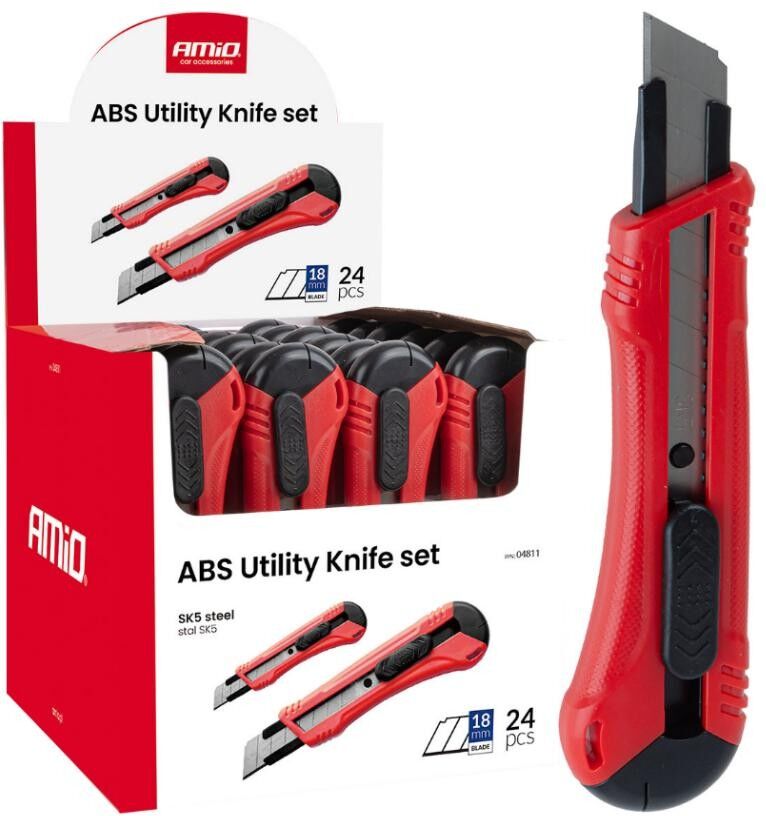
AMiO 04811 CutterQuantity Unit: Kit; Quantity: 24; Housing material: ABS (Acrylonitrile-Butadiene-Styrene Copolymerisate); Blade Length [mm]: 100; Blade Thickness [mm]: 18, 0,5; Tool handle type: Ergonomically Shaped Handle; Blade material: Tool Steel24,49 £*Shipping: 8,45 £Secure redirect to the provider
-
AMiO 02431 WorklightMounting Type: mounting, Fitting; Supplementary Article / Supplementary Info Info 2: with screw; Width [mm]: 95; Height: 77; Light Distribution: Spot Illumination; LED Colour: white; Number of LEDs: 6; Colour Temperature [K]: 6000-6500; Product line: AWL17; Specification: E9; Protection Type (IP Code): IP678,99 £*Shipping: 8,45 £Secure redirect to the provider
-
AMiO 02432 WorklightMounting Type: mounting, Fitting; Supplementary Article / Supplementary Info Info 2: with screw; Width [mm]: 50; Length [mm]: 50; Rated Voltage [V]: 9-36; Light Distribution: Spot Illumination; LED Colour: white; Number of LEDs: 1; Colour Temperature [K]: 6000-6500; Product line: AWL18; Specification: E910,49 £*Shipping: 8,45 £Secure redirect to the provider



-
What is the difference between electrical resistance and specific resistance?
Electrical resistance is the opposition to the flow of electric current in a material, measured in ohms. It is a property of the material itself and is dependent on factors such as the material's dimensions and temperature. Specific resistance, on the other hand, is a material property that quantifies how much a material resists the flow of electric current compared to a standard material. It is also known as resistivity and is measured in ohm-meters. In essence, electrical resistance is the overall resistance of a material, while specific resistance is a more intrinsic property of the material itself. **
-
How do I calculate the resistance with the internal resistance?
To calculate the total resistance with the internal resistance, you can use the formula: R_total = R_internal + R_external, where R_total is the total resistance, R_internal is the internal resistance, and R_external is the external resistance. This formula takes into account the resistance from both the internal and external components of the circuit. By adding the internal and external resistances together, you can determine the total resistance in the circuit. **
-
What is the difference between insulation resistance and surface resistance?
Insulation resistance measures the resistance to the flow of current through the insulation material between two conductors, while surface resistance measures the resistance to the flow of current across the surface of a material. Insulation resistance is typically used to assess the effectiveness of insulation materials in preventing current leakage, while surface resistance is used to evaluate the cleanliness and conductivity of surfaces in electronic and electrical applications. In summary, insulation resistance measures the resistance through a material, while surface resistance measures the resistance across a material's surface. **
-
Is the protective resistance the same as the series resistance?
No, the protective resistance is not the same as the series resistance. The protective resistance is a component used to limit the current in a circuit and protect other components from damage. It is typically used in parallel with the component it is protecting. On the other hand, the series resistance is a component that is connected in series with other components in a circuit, affecting the overall resistance and current flow in the circuit. While both resistances are used to control current, they serve different purposes and are connected in different ways within a circuit. **


What is the total resistance when the irrelevant resistance is given?
The total resistance in a circuit is the sum of all the individual resistances. When an irrelevant resistance is given, it should be ignored when calculating the total resistance. Only the relevant resistances should be added together to find the total resistance. It is important to carefully identify and consider only the resistances that affect the flow of current in the circuit when calculating the total resistance. **
How can the individual resistance be determined from the total resistance?
The individual resistance can be determined from the total resistance by using the formula for resistors in parallel or in series. For resistors in parallel, the individual resistance can be found using the formula 1/R_total = 1/R1 + 1/R2 + 1/R3 + ... + 1/Rn, where R_total is the total resistance and R1, R2, R3, etc. are the individual resistances. For resistors in series, the individual resistance can be found by simply adding up the individual resistances to get the total resistance. Then, the individual resistance can be determined by subtracting the sum of the other resistances from the total resistance. **
Top-Angebote
Products related to AMiO-04088-Resistance:
-
AMiO 03698 WorklightPower [W]: 50; Lamp Type: LED; Voltage from [V]: 9; Voltage to [V]: 36; Colour Temperature [K]: 6000; Luminous Flux 1 [lm]: 5500; Operating temperature from [°C]: -45; Operating temperature to [°C]: 85; Shape: round; Supplementary Article / Supplementary Info: Waterproof; Size: 172 mm; Thickness: 6029,99 £*Shipping: 8,45 £Secure redirect to the provider
-
AMiO 04663 HeadlightLamp Type: LED; Battery: rechargeable, Lithium Polymer Battery; Material: ABS (Acrylonitrile-Butadiene-Styrene Copolymerisate); Battery Capacity [mAh]: 1000; Weight [g]: 200, 75 ; Rotation angle [°]: 90; Light colour: red, white; Supplementary Info: Motion sensor, Strobe mode; Size: 73 × 41 × 42 mm; Number of diodes: x1 XPG+COB12,49 £*Shipping: 8,45 £Secure redirect to the provider
-
AMiO 04666 HeadlightLamp Type: LED; Battery: rechargeable, Lithium Polymer Battery; Material: ABS (Acrylonitrile-Butadiene-Styrene Copolymerisate); Battery Capacity [mAh]: 1800 ; Weight [g]: 200, 98; Rotation angle [°]: 45; Size: 78 × 50.5 × 37 mm; Number of diodes: x1 COB; Light colour: white; Supplementary Info: Motion sensor18,49 £*Shipping: 8,45 £Secure redirect to the provider
-
AMiO 04811 CutterQuantity Unit: Kit; Quantity: 24; Housing material: ABS (Acrylonitrile-Butadiene-Styrene Copolymerisate); Blade Length [mm]: 100; Blade Thickness [mm]: 18, 0,5; Tool handle type: Ergonomically Shaped Handle; Blade material: Tool Steel24,49 £*Shipping: 8,45 £Secure redirect to the provider
-
What is the difference between resistance and specific resistance?
Resistance is the opposition to the flow of electric current in a material, measured in ohms. It is a property of the material itself. Specific resistance, also known as resistivity, is a material property that quantifies how strongly a material opposes the flow of electric current. It is a characteristic of the material's composition and is used to calculate the resistance of a specific shape and size of material. **
-
What are the tolerances for resistance chains and resistance cubes?
The tolerances for resistance chains and resistance cubes typically vary depending on the manufacturer and the specific product. However, in general, resistance chains and cubes are designed to have tight tolerances to ensure accurate and consistent resistance levels for users. It is common for resistance chains and cubes to have tolerances within a few percentage points to maintain their effectiveness and reliability during workouts. It is recommended to refer to the product specifications provided by the manufacturer for more detailed information on the tolerances of specific resistance chains and cubes. **
-
What is the difference between electrical resistance and specific resistance?
Electrical resistance is the opposition to the flow of electric current in a material, measured in ohms. It is a property of the material itself and is dependent on factors such as the material's dimensions and temperature. Specific resistance, on the other hand, is a material property that quantifies how much a material resists the flow of electric current compared to a standard material. It is also known as resistivity and is measured in ohm-meters. In essence, electrical resistance is the overall resistance of a material, while specific resistance is a more intrinsic property of the material itself. **
-
How do I calculate the resistance with the internal resistance?
To calculate the total resistance with the internal resistance, you can use the formula: R_total = R_internal + R_external, where R_total is the total resistance, R_internal is the internal resistance, and R_external is the external resistance. This formula takes into account the resistance from both the internal and external components of the circuit. By adding the internal and external resistances together, you can determine the total resistance in the circuit. **
Similar search terms for AMiO-04088-Resistance
-
AMiO 02431 WorklightMounting Type: mounting, Fitting; Supplementary Article / Supplementary Info Info 2: with screw; Width [mm]: 95; Height: 77; Light Distribution: Spot Illumination; LED Colour: white; Number of LEDs: 6; Colour Temperature [K]: 6000-6500; Product line: AWL17; Specification: E9; Protection Type (IP Code): IP678,99 £*Shipping: 8,45 £Secure redirect to the provider
-
AMiO 02432 WorklightMounting Type: mounting, Fitting; Supplementary Article / Supplementary Info Info 2: with screw; Width [mm]: 50; Length [mm]: 50; Rated Voltage [V]: 9-36; Light Distribution: Spot Illumination; LED Colour: white; Number of LEDs: 1; Colour Temperature [K]: 6000-6500; Product line: AWL18; Specification: E910,49 £*Shipping: 8,45 £Secure redirect to the provider
-
AMiO 02468 InverterPower supply: Car cigarette socket; Connection type outlet: Shockproof socket; Input Voltage [V]: 12; Output Voltage [V]: 230; Rated Power [W]: 300; Connectors/Plugs: USB; Product line: PI01; Output current [A]: 13.5, 25; Length [mm]: 80; Width [mm]: 64; Height: 38; Weight [g]: 23017,99 £*Shipping: 8,45 £Secure redirect to the provider
-
AMiO 02469 InverterPower supply: Car cigarette socket; Connection type outlet: Shockproof socket; Input Voltage [V]: 12; Output Voltage [V]: 230; Rated Power [W]: 150, 300; Connectors/Plugs: USB; Product line: PI02; Overheating protection: Yes; Short Circuit Protection: Yes; Length [mm]: 142; Width [mm]: 90; Weight [g]: 230; Registration Type: FCC approved, RoHS compliant; Output current [A]: 13.5, 2514,49 £*Shipping: 8,45 £Secure redirect to the provider
-
What is the difference between insulation resistance and surface resistance?
Insulation resistance measures the resistance to the flow of current through the insulation material between two conductors, while surface resistance measures the resistance to the flow of current across the surface of a material. Insulation resistance is typically used to assess the effectiveness of insulation materials in preventing current leakage, while surface resistance is used to evaluate the cleanliness and conductivity of surfaces in electronic and electrical applications. In summary, insulation resistance measures the resistance through a material, while surface resistance measures the resistance across a material's surface. **
-
Is the protective resistance the same as the series resistance?
No, the protective resistance is not the same as the series resistance. The protective resistance is a component used to limit the current in a circuit and protect other components from damage. It is typically used in parallel with the component it is protecting. On the other hand, the series resistance is a component that is connected in series with other components in a circuit, affecting the overall resistance and current flow in the circuit. While both resistances are used to control current, they serve different purposes and are connected in different ways within a circuit. **
-
What is the total resistance when the irrelevant resistance is given?
The total resistance in a circuit is the sum of all the individual resistances. When an irrelevant resistance is given, it should be ignored when calculating the total resistance. Only the relevant resistances should be added together to find the total resistance. It is important to carefully identify and consider only the resistances that affect the flow of current in the circuit when calculating the total resistance. **
-
How can the individual resistance be determined from the total resistance?
The individual resistance can be determined from the total resistance by using the formula for resistors in parallel or in series. For resistors in parallel, the individual resistance can be found using the formula 1/R_total = 1/R1 + 1/R2 + 1/R3 + ... + 1/Rn, where R_total is the total resistance and R1, R2, R3, etc. are the individual resistances. For resistors in series, the individual resistance can be found by simply adding up the individual resistances to get the total resistance. Then, the individual resistance can be determined by subtracting the sum of the other resistances from the total resistance. **
* All prices are inclusive of VAT and, if applicable, plus shipping costs. The offer information is based on the details provided by the respective shop and is updated through automated processes. Real-time updates do not occur, so deviations can occur in individual cases. ** Note: Parts of this content were created by AI.